

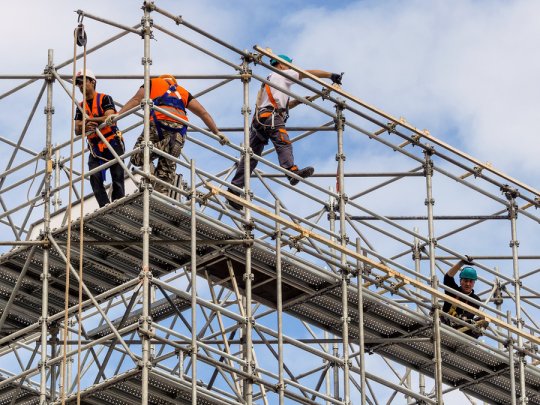


Basic Aluminum Scaffold Training
Overview
The Basic Aluminum Scaffold Training is a competency-based safety program designed to provide participants with the essential knowledge and practical skills required to safely assemble, dismantle, inspect, and use aluminum scaffolding systems. The course emphasizes safe working practices, hazard awareness, and compliance with international occupational health and safety standards applicable to working at height.
This training is ideal for workers, technicians, and supervisors involved in construction, maintenance, facility management, and industrial operations where scaffold access systems are used.
Course Objectives
By the end of the training, participants will be able to:
- Understand the fundamentals of aluminum scaffold systems and their applications
- Identify different types of scaffolding components and their correct usage
- Recognize common hazards associated with working at height
- Apply safe erection, alteration, and dismantling procedures
- Conduct basic scaffold inspections before and during use
- Use personal protective equipment (PPE) correctly
- Comply with relevant safety regulations and industry standards
- Promote a safety-first culture in scaffold-related activities
Target Audience
This course is suitable for:
- Construction workers and laborers
- Scaffolders and helpers
- Maintenance technicians
- Facility management staff
- Safety officers and site supervisors
- Any personnel working at height using scaffold systems
Course Duration
- Recommended Duration: 8–16 hours (1–2 days)
- Can be adjusted based on client requirements (theory + practical sessions)
Course Content / Modules
1. Introduction to Scaffolding Systems
- Purpose and importance of scaffolding
- Overview of aluminum scaffolding types
- Advantages of aluminum scaffold systems
2. Legal Requirements and Safety Standards
- Overview of workplace safety regulations
- Employer and employee responsibilities
- Industry best practices for working at height
3. Scaffold Components and Terminology
- Standards, frames, braces, platforms, and base plates
- Locking systems and safety accessories
- Identification of defective components
4. Hazard Identification and Risk Assessment
- Common scaffold hazards (falls, collapse, falling objects)
- Risk assessment techniques
- Preventive control measures
5. Safe Assembly and Dismantling Procedures
- Step-by-step erection process
- Safe dismantling techniques
- Stability and load considerations
- Working on uneven surfaces
6. Inspection and Maintenance
- Pre-use inspection checklist
- Routine inspection procedures
- Tagging systems (safe/unsafe scaffolds)
- Maintenance of aluminum scaffold parts
7. Personal Protective Equipment (PPE)
- Required PPE for scaffold work
- Proper usage and inspection of PPE
- Fall protection systems
8. Emergency Procedures
- Response to scaffold collapse or incident
- Rescue procedures at height
- Reporting and documentation
Training Methodology
- Classroom-based theoretical instruction
- Practical demonstration and hands-on exercises
- Group discussions and case studies
- Instructor-led scaffold assembly practice (where applicable)
- Safety drills and scenario-based learning
Assessment & Evaluation
Participants will be assessed through:
- Written or verbal knowledge assessment
- Practical demonstration of scaffold assembly/disassembly
- Instructor observation of safety compliance
- Participation in exercises and discussions
Learning Outcomes
Upon successful completion, participants will:
- Be competent in basic aluminum scaffold handling
- Understand and apply safe working-at-height practices
- Identify risks and implement preventive measures
- Carry out scaffold inspections effectively
- Contribute to safer construction and maintenance environments
Certification
Participants who successfully complete the training will receive a Certificate of Completion in Basic Aluminum Scaffold Training, confirming their understanding of safe scaffold practices and working-at-height awareness.